
Melasma: Causes, Triggers and Treatment Choices
Recent Posts
- All Posts
- Acne
- Acne Scar
- Botox
- Chemical Peel Treatment
- Dark circle
- Hair Care
- Hair PRP
- Hair Treatments
- HydraFacial
- Melasma
- Pigmentation
- Skin & Hair Care
- Skin Tanning
- Summer Skincare






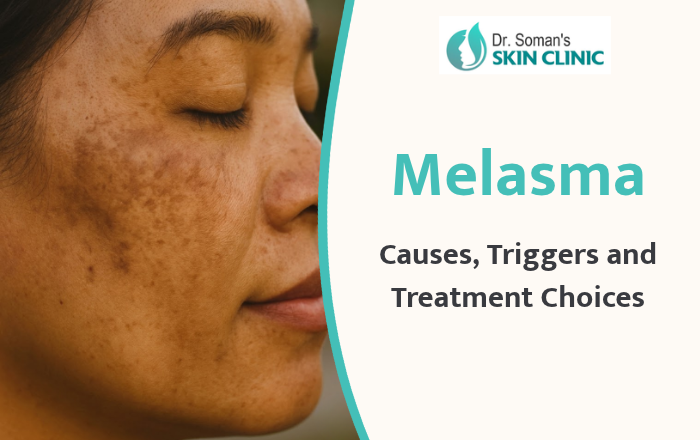
Brown or grey-brown patches on the cheeks, forehead, upper lip or nose are a common reason people visit a skin clinic. When these patches appear in a symmetrical pattern on the face, the cause is often melasma. It is not harmful, but it can be stubborn, and it can affect how comfortable you feel about your skin.
This article explains the causes of melasma, the triggers that can make it darker, and the treatment choices doctors commonly use. It also covers what you can do at home. The right plan depends on your skin, so it should be decided after a skin examination.
What Is Melasma?
Melasma is a common skin condition in which patches of darker skin appear, mostly on the face. The patches are usually flat, uneven in shape and appear on both sides of the face. It is more common in women and often seen in people with medium to brown skin tones, which includes many Indian skin types.
Melasma is caused by increased activity of the pigment-producing cells (melanocytes) in the skin. It does not hurt, itch or turn into skin cancer, but it tends to come back if the triggers continue.
Types of Melasma
A dermatologist may describe melasma by the depth of the pigment in the skin:
- Epidermal: pigment in the upper layer of skin, often brown and well defined
- Dermal: pigment in the deeper layer, often grey-brown with blurred edges
- Mixed: a combination of both
Knowing the type helps in choosing the treatment, as deeper pigment usually responds more slowly.
Causes of Melasma
There is no single cause. Melasma usually develops from a combination of factors:
Sun Exposure
Ultraviolet rays and visible light stimulate the pigment cells. Sun exposure is one of the most important factors for the appearance of melasma and for its return.
Hormonal Changes
Pregnancy, birth control pills and hormone therapy are linked with melasma. This is why it is sometimes called the “mask of pregnancy”.
Genetics
A family history of melasma raises the likelihood that you will develop it.
Skin Type
People with darker skin tones have more active pigment cells, and so they are more prone to it.
Common Triggers That Can Worsen Melasma
- Unprotected exposure to sunlight, including on cloudy days and near windows
- Heat from cooking, hot environments and similar sources
- Skin products that irritate or burn the skin
- Harsh scrubbing, waxing or threading over the patches
- Starting or stopping hormonal medicines without medical advice
- Some medicines and thyroid problems, which your doctor may check
- Untreated skin inflammation, such as from acne or allergy
- Stress and poor sleep, which some people report as a trigger
If you notice that your patches become darker after a certain product or procedure, tell your doctor.
How Is Melasma Diagnosed?
Melasma is generally diagnosed by looking at the skin. The doctor asks about your medicines, pregnancies, family history, skincare routine and sun habits. A special lamp (Wood’s lamp) may be used to see how deep the pigment is. Other conditions that cause dark patches, such as post-acne marks, sun spots or reactions to cosmetics, can look similar, so an examination helps to avoid the wrong treatment. You can read more about pigmentation care in Karvenagar.
Melasma Treatment Choices
Treatment is chosen after assessing your skin type, the depth of the pigment and your medical history. It often combines several steps and needs patience, as improvement is gradual.
1. Sun Protection
This is the foundation of any plan. Doctors commonly recommend a broad-spectrum sunscreen, applied every morning and reapplied through the day, along with a hat, sunglasses or an umbrella. Tinted sunscreens containing iron oxide may be suggested because they also protect against visible light.
2. Topical Medicines
Creams that reduce pigment production, such as hydroquinone, azelaic acid, kojic acid, tretinoin or combination creams, may be prescribed. These can irritate or cause side effects if used incorrectly, so they should be used only as directed by your doctor, and for the time prescribed.
3. Oral Medicines
In selected patients, doctors may consider tablets to support treatment. These are not suitable for everyone, and the doctor will review your medical history first.
4. Chemical Peels
Superficial peels use a mild acid to remove the upper layer of skin cells and help lighten pigment. They are done in a clinic at suitable intervals and require proper aftercare.
5. Microneedling and Other Procedures
Microneedling or lasers are sometimes considered when other methods are not enough. Because heat or injury can make melasma darker in some people, these options need careful selection by a dermatologist.
6. Maintenance and Follow-Up
Melasma can return, especially with sun exposure or hormonal changes. Regular sun protection, a gentle skincare routine and follow-up visits help to keep it in check. Results differ from person to person.
Home Care Tips for Melasma
- Use sunscreen every day, even when indoors near windows.
- Wash your face with a gentle cleanser and avoid scrubbing.
- Do not try home remedies such as lemon juice, toothpaste or bleaching creams, as they may irritate and worsen pigment.
- Avoid buying steroid or “fairness” creams without a prescription.
- Use only the products recommended by your doctor.
- Do not stop a treatment early without telling your doctor.
For other pigmentation concerns, see this guide on laser treatment for pigmentation.
When to See a Dermatologist
Consult a skin doctor if patches are spreading or darkening, if you are not sure whether it is melasma, if home products have caused burning or rashes, or if you want a treatment plan that is suitable for your skin.
Frequently Asked Questions About Melasma
1. Can melasma go away on its own?
In some people, it fades after the trigger is removed, such as after pregnancy or stopping a hormonal medicine. In many, it persists and needs treatment.
2. Is melasma permanent?
It is a long-term condition that can be controlled, but it may return. Sun protection and regular follow-up help.
3. Is melasma contagious?
No. It cannot spread from person to person.
4. Can men get melasma?
Yes, although it is less common than in women.
5. How long does treatment take?
It usually takes several weeks to months, and the time depends on the depth of pigment and how well the plan is followed.
6. Can I use makeup over melasma?
Yes, gentle makeup is generally fine. Remove it properly at night, and ask your doctor if your skin is sensitive.
Consult a Dermatologist for Melasma in Karvenagar, Pune
If you have patches that are not fading, you can book a consultation with Dr. Vallari Soman, Consultant Dermatologist and Cosmetologist (MBBS, DVD) with 12+ years of clinical experience, at Dr. Soman’s Skin Clinic in Karvenagar, Pune. She will examine your skin, discuss the possible causes and explain the options suited to you. You can also use the contact page to request an appointment.
Name: Dr. Soman’s Skin Clinic | Dr. Vallari Soman | Dermatologist in Karvenagar, Pune
Address: SHOP No 8, Laxmi terraces, near Paythan Footwear shop, Karvenagar, Pune, Maharashtra 411052
Phone: 88309 79364
This article is for general information and does not replace a medical consultation.