
Hair Fall in Women: 10 Common Causes and Treatments
Recent Posts
- All Posts
- Acne
- Acne Scar
- Botox
- Chemical Peel Treatment
- Dark circle
- Hair Care
- Hair PRP
- Hair Treatments
- HydraFacial
- Melasma
- Pigmentation
- Skin & Hair Care
- Skin Tanning
- Summer Skincare



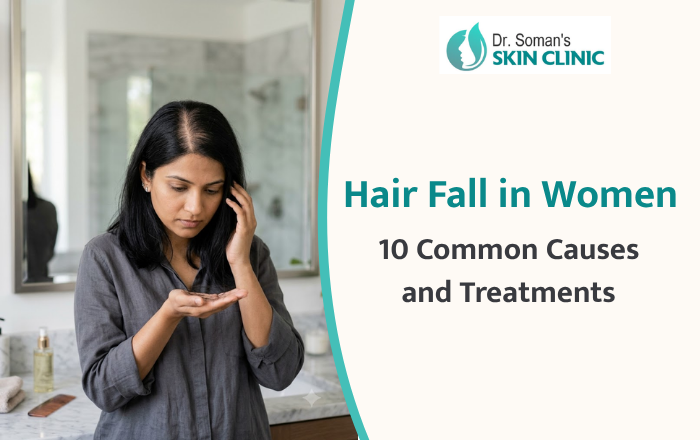
Losing a little hair every day is completely normal — most people shed anywhere from 50 to 100 strands daily as part of the natural hair growth cycle. But when hair fall becomes noticeably heavier, or when you start seeing thinning patches, a widening part, or clumps of hair in the shower drain, it’s a sign that something deeper may be going on.
Hair fall in women can stem from a wide range of causes, from hormonal shifts to nutritional gaps to underlying medical conditions. The good news is that most causes are identifiable and treatable, especially when addressed early. This guide walks through the ten most common causes of hair fall in women and the treatment options that can help restore healthier, fuller hair.
Why Hair Fall in Women Deserves Special Attention
Hair loss patterns in women often differ from those in men. Rather than receding hairlines or bald spots, women more commonly experience diffuse thinning across the scalp, a widening center part, or an overall reduction in hair volume. Because the causes are so varied — spanning hormones, lifestyle, and health conditions — pinpointing the exact reason is key to choosing an effective treatment.
10 Common Causes of Hair Fall in Women
1. Hormonal Imbalances
Fluctuations in estrogen and progesterone — due to pregnancy, childbirth, menopause, or conditions like PCOS — can disrupt the hair growth cycle and trigger noticeable shedding.
2. Telogen Effluvium (Stress-Related Shedding)
Physical or emotional stress, major surgery, illness, or a sudden shock to the body can push a large number of hair follicles into the “resting” phase prematurely, leading to excessive shedding a few months later.
3. Nutritional Deficiencies
Low levels of iron, vitamin D, zinc, biotin, or protein can weaken hair follicles and slow down hair growth. Crash dieting or restrictive eating patterns are common culprits.
4. Thyroid Disorders
Both hypothyroidism and hyperthyroidism can interfere with the hair growth cycle, often causing thinning across the entire scalp rather than in specific patches.
5. Androgenetic Alopecia (Female Pattern Hair Loss)
This genetic form of hair loss causes gradual thinning, typically along the crown or part line, and tends to run in families.
6. Postpartum Hair Loss
Many women experience noticeable shedding a few months after giving birth, as hormone levels return to pre-pregnancy levels. This is usually temporary and resolves within several months.
7. Excessive Styling and Heat Damage
Frequent use of heat styling tools, chemical treatments, and tight hairstyles like tight ponytails or braids can weaken hair shafts and contribute to breakage and traction alopecia.
8. Underlying Medical Conditions
Autoimmune conditions like alopecia areata, as well as chronic illnesses, can trigger hair loss as a symptom rather than a standalone issue.
9. Medications
Certain medications — including some used for blood pressure, depression, and hormonal birth control — can list hair loss as a side effect.
10. Scalp Conditions
Dandruff, fungal infections, or chronic scalp inflammation can affect follicle health and contribute to hair thinning if left untreated.
How Hair Fall Is Diagnosed
Because so many factors can contribute to hair fall, an accurate diagnosis usually involves:
- A detailed medical and family history
- A physical scalp examination
- Blood tests to check hormone levels, thyroid function, iron, and vitamin levels
- In some cases, a scalp biopsy or trichoscopy for a closer look at hair follicles
Identifying the specific cause is essential, since treatment for hormonal hair loss looks very different from treatment for a nutritional deficiency or a scalp infection.
Effective Treatments for Hair Fall in Women
1. Topical Treatments
Minoxidil, one of the most well-researched topical treatments, helps stimulate hair follicles and is commonly recommended for female pattern hair loss.
2. Nutritional Supplementation
When deficiencies are identified through blood work, targeted supplementation with iron, biotin, vitamin D, or zinc can support healthier hair regrowth over time.
3. Hormonal Treatment
For hair fall linked to conditions like PCOS or thyroid imbalances, addressing the underlying hormonal issue often leads to significant improvement in hair health.
4. PRP (Platelet-Rich Plasma) Therapy
This treatment uses a concentration of your own platelets, injected into the scalp, to stimulate hair follicles and encourage regrowth. It has gained popularity as a non-surgical option with minimal downtime.
5. Low-Level Laser Therapy (LLLT)
LLLT devices, whether handheld or in-clinic, use red light to stimulate blood flow to hair follicles and support the growth phase of hair.
6. Prescription Medications
In some cases, dermatologists may prescribe medications that target hormonal causes of hair loss, particularly for androgenetic alopecia.
7. Lifestyle and Scalp Care Adjustments
Reducing heat styling, avoiding tight hairstyles, managing stress, and using gentle, scalp-friendly hair care products can all support healthier hair over time.
8. Treating Underlying Scalp Conditions
Addressing dandruff, fungal infections, or inflammation with appropriate topical or medicated treatments helps restore a healthy environment for hair growth.
A dermatologist can combine several of these approaches into a personalized treatment plan based on your specific diagnosis and hair loss pattern.
When to See a Dermatologist
While some hair shedding is normal, it’s worth consulting a dermatologist if you notice:
- Sudden or excessive hair shedding
- Visible thinning or a widening part
- Bald patches or uneven hair loss
- Hair fall accompanied by scalp itching, redness, or flaking
- No improvement despite dietary or lifestyle changes
Early evaluation makes treatment more effective and can prevent further hair loss down the line.
Tips to Support Healthy Hair Growth
- Eat a balanced diet rich in protein, iron, and essential vitamins
- Avoid excessive heat styling and harsh chemical treatments
- Be gentle when brushing or tying up wet hair
- Manage stress through regular exercise, sleep, and relaxation techniques
- Get regular scalp checkups if you have a family history of hair loss
Frequently Asked Questions
Q: Is hair fall in women reversible?
A: In many cases, yes — especially when the cause is nutritional, hormonal, or stress-related. Early treatment significantly improves the chances of regrowth.
Q: How much hair loss is considered normal?
A: Shedding 50 to 100 hairs a day is generally considered normal. Anything significantly beyond that, or noticeable thinning, may warrant a dermatologist visit.
Q: Can stress really cause hair fall?
A: Yes. Significant physical or emotional stress can push hair follicles into a resting phase, leading to increased shedding a few months later, a condition known as telogen effluvium.
Q: How long does it take to see results from hair fall treatment?
A: Most treatments take a minimum of three to six months of consistent use before visible improvement, since hair growth cycles are gradual.
Q: Can diet alone fix hair fall?
A: Diet plays an important role, especially if a deficiency is the cause, but it may not fully resolve hair fall linked to hormonal or genetic factors, which often require additional treatment.
Have questions? We’re just a message away! Contact us on WhatsApp — Click Here to Chat with Us
Concerned About Hair Fall? Get Expert Treatment Today
Hair fall can have many underlying causes, and the right treatment starts with an accurate diagnosis. If you’re experiencing excessive hair loss, thinning hair, or persistent shedding, don’t wait for the condition to worsen.
Consult Dr. Vallari Soman (MBBS, DVD) at Dr. Soman’s Skin Clinic for a personalized evaluation and evidence-based treatment plan. With over 12+ years of experience in dermatology and hair disorders, Dr. Soman provides expert care tailored to your specific hair and scalp concerns.
Book your consultation today and take the first step toward healthier, stronger hair at Dr. Soman’s Skin Clinic, Karvenagar, Pune.