
Why Acne Scars Happen and the Best Ways to Treat Them
Recent Posts
- All Posts
- Acne
- Acne Scar
- Botox
- Chemical Peel Treatment
- Dark circle
- Hair Care
- Hair PRP
- Hair Treatments
- HydraFacial
- Melasma
- Pigmentation
- Skin & Hair Care
- Skin Tanning
- Summer Skincare



You finally got rid of that stubborn pimple. You waited, you resisted the urge to pop it, and now it’s gone. But now there’s something else staring back at you in the mirror a dark mark, a pit, or an uneven patch of skin that just won’t budge. Sound familiar?
Acne scars are one of the most common skin concerns, yet so many people don’t know why they happen or what actually works to treat them. The good news? They are treatable. You just need the right information and the right help.
Let’s break it all down in simple terms.
What Are Acne Scars — and Are They Really Permanent?
First things first — not everything left behind by a pimple is a true acne scar.
There are two things people often confuse:
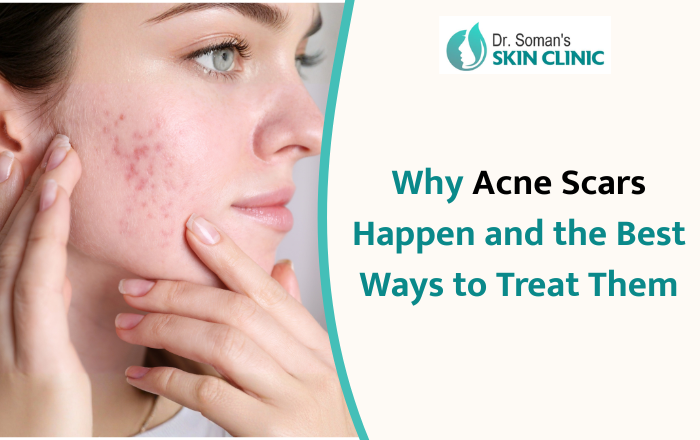
Acne marks are flat, dark or reddish spots left after a pimple heals. These are caused by pigmentation changes and can fade on their own over weeks or months.
Acne scars, on the other hand, involve actual changes in the skin’s texture and structure — think pits, indentations, or raised bumps. These don’t go away on their own, because the damage goes deeper than the surface.
So no, true acne scars are not permanent — but they do need proper treatment to improve.
Why Do Acne Scars Form in the First Place?
When a pimple becomes inflamed, it damages the skin tissue underneath. Your skin then tries to repair itself by producing collagen. When it produces too little collagen, you get a depressed scar (like a pit). When it produces too much, you get a raised scar.
Some people are simply more prone to scarring because of their genetics, skin tone, or because they pick and pop their pimples (we’ve all been guilty of this). Delayed treatment of acne also increases the chance of scarring significantly.
The 4 Main Types of Acne Scars
- Icepick scars — deep, narrow holes in the skin
- Boxcar scars — wide, shallow craters with defined edges
- Rolling scars — give skin a wavy, uneven appearance
- Hypertrophic or keloid scars — raised, thick scars caused by excess collagen
Knowing which type of acne scar you have is the first step toward treating it correctly.
The Best Treatments for Acne Scars That Actually Work
There is no single magic solution for acne scar treatment — but there are several proven options depending on your scar type and skin type.
1. Chemical Peels
Chemical peels use acids like glycolic or salicylic acid to remove the top layer of skin and encourage fresh skin growth. They work well for surface-level scars and dark marks. Multiple sessions are usually needed.
2. Microneedling
Tiny needles create controlled micro-injuries in the skin, which triggers collagen production. This is one of the most popular treatments for acne scars, especially for rolling and boxcar scars. RF (radiofrequency) microneedling takes this a step further by delivering heat energy deep into the skin.
3. Laser Treatment
Fractional CO2 lasers resurface the skin and stimulate collagen rebuilding. This is highly effective for deeper acne scars but requires some downtime. The right laser depends on your skin tone and scar depth.
4. Subcision
This is a minor procedure where a needle is inserted under the scar to break the fibrous bands pulling the skin down. It’s particularly effective for rolling scars and is often combined with other treatments.
5. Dermal Fillers
For deep, depressed scars, fillers can temporarily plump up the skin and reduce the appearance of indentations. Results are visible immediately but need maintenance.
6. Topical Treatments
Products with retinoids, Vitamin C, or niacinamide can help fade dark marks and support skin renewal — but they work slowly and cannot fix deep acne scars on their own. They’re great for maintenance alongside clinical treatments.
Do Home Remedies Work for Acne Scars?
Honestly? For true acne scars, not really. Lemon juice, turmeric, and aloe vera may help with minor pigmentation, but they cannot change the texture of your skin or repair collagen damage. Some home remedies can even irritate your skin and make things worse.
If your scars are bothering you and haven’t improved in months, it’s time to stop guessing and speak to a dermatologist.
How Long Does Acne Scar Treatment Take?
Results depend on how deep your scars are and which treatments you use. Mild marks may fade in 4–8 weeks. Moderate scars typically take 3–6 months. Deep or severe acne scars may need 6–12 months of consistent treatment with a combination of approaches.
The key is patience and consistency.
Talk to Dr. Vallari Soman — Dermatologist & Cosmetologist
If you’re tired of trying products that don’t deliver results, it’s time to get a real answer. Dr. Vallari Soman, Dermatologist & Cosmetologist, helps patients understand exactly what type of acne scars they have and builds a treatment plan that actually fits their skin.
No guesswork. No wasted money. Just honest, results-focused skin care.
Book your consultation with Dr. Vallari Soman today and take the first real step toward skin you feel confident in.
FAQs About Acne Scars
Q: Can acne scars go away without treatment?
Flat pigmentation marks may fade over time, but textural acne scars involving pits or raised tissue need treatment to improve.
Q: What is the best treatment for deep acne scars?
A combination of subcision, fractional laser, and microneedling tends to give the best results for deep acne scar treatment.
Q: Is acne scar treatment painful?
Most treatments are well-tolerated. Numbing cream is applied beforehand to keep discomfort minimal.
Q: How can I prevent acne scars from forming?
Treat acne early, never pick your pimples, wear sunscreen daily, and see a dermatologist before scars develop.
Have questions? We’re just a message away! Contact us on WhatsApp — Click Here to Chat with Us