
Dark Circles Under Your Eyes: 7 Real Causes, Proven Treatments & When to See a Doctor
Recent Posts
- All Posts
- Acne
- Acne Scar
- Botox
- Chemical Peel Treatment
- Dark circle
- Hair Care
- Hair PRP
- Hair Treatments
- HydraFacial
- Melasma
- Pigmentation
- Skin & Hair Care
- Skin Tanning
- Summer Skincare







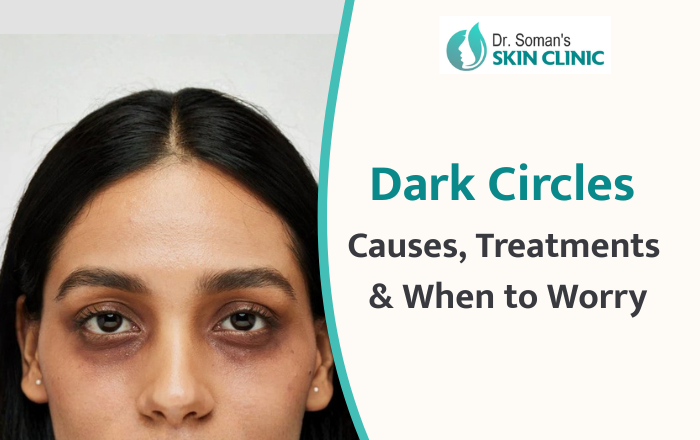
Are dark circles under eyes making you look exhausted even after a full night’s sleep? You wake up, glance in the mirror, and there they are — those stubborn shadows sitting right under your eyes, making you look years older than you feel. Sound familiar?
You’re not alone. Dark circles are one of the most common skin concerns people deal with — across all ages, skin tones, and lifestyles. The good news? Once you understand why they’re there, fixing them becomes a whole lot easier.
In this blog, we’re breaking down everything you need to know — from the real causes of dark circles under eyes, to treatments that actually work, to knowing when those shadows might be telling you something more serious.
What Exactly Are Dark Circles?
Dark circles are the darkened areas of skin that appear beneath the lower eyelids. They can look bluish, purplish, brownish, or even reddish — depending on your skin tone and the underlying cause.
Here’s something most people don’t know: dark circles and eye bags are not the same thing. Eye bags are caused by puffiness or swelling. Dark circles are about discolouration — a change in skin tone under the eye area.
People with deeper skin tones, including South Asians, tend to experience periorbital hyperpigmentation (the medical term for dark circles) more frequently due to naturally higher melanin activity in the skin.
7 Real Causes of Dark Circles (It’s Not Always About Sleep)
1. Sleep Deprivation
Yes, losing sleep does make dark circles under eyes worse. When you don’t sleep enough, your skin turns pale, making the blood vessels beneath your eyes more visible — which creates that bluish shadow. But sleep alone is rarely the only cause.
2. Genetics — The Cause You Can’t Sleep Off
If your parents had dark circles, chances are you will too. Genetics is actually the biggest factor behind dark circles, accounting for up to 63% of cases. If it runs in your family, lifestyle changes alone may not fully solve the problem.
3. Allergies & Nasal Congestion
Ever noticed your dark circles get worse during allergy season? That’s called the allergy shiner effect. When you’re congested, blood pools in the veins around your eyes, creating a darker appearance. Rubbing itchy eyes also makes things worse by breaking tiny blood vessels.
4. Dehydration
When your body is dehydrated, the skin under your eyes looks dull, sunken, and darker. The under-eye area is one of the thinnest skin areas on your face — so even mild dehydration shows up here first.
5. Sun Exposure & Melanin Overproduction
UV rays trigger excess melanin production, and the delicate skin around the eyes is especially vulnerable. Skipping sunscreen around the eye area? That could be making your dark circles significantly worse over time.
6. Ageing & Volume Loss
As you age, the fat pads beneath your eyes shrink, and the skin loses collagen and elasticity. This creates a hollow look — a shadow that looks just like dark circles but is actually a structural change in your face.
7. Nutritional Deficiencies
Low levels of iron, Vitamin B12, or Vitamin K can all lead to dark circles under eyes. Iron-deficiency anaemia alone affects over 1.6 billion people globally and is one of the most overlooked causes of dark circles, especially in women.
Home Remedies That Actually Work
Not all home remedies are created equal. Here’s what genuinely helps:
- Cold compresses — Reduces puffiness and temporarily shrinks dilated blood vessels. Use chilled cucumber slices or a cold spoon for 10 minutes each morning.
- Vitamin C serums — One of the most effective topical ingredients for brightening dark circles. Vitamin C fades pigmentation and boosts collagen. Apply under your eyes daily.
- Sleep position — Sleeping on your back with your head slightly elevated prevents fluid from pooling under your eyes overnight.
- Hydration and diet — Drink enough water and eat iron-rich foods like spinach, lentils, and eggs. Simple, but genuinely effective for deficiency-related dark circles.
- Sunscreen under the eyes — The most underrated step. Use a broad-spectrum SPF every single morning, even indoors near windows.
What doesn’t work: Raw potato juice, tea bags, and lemon juice have little to no scientific backing for dark circles. Save yourself the mess.
Clinical Treatments for Dark Circles
When home remedies aren’t enough — especially for genetic dark circles or pigmentation-type dark circles — dermatologists have several effective options:
- Topical treatments — Prescription creams containing retinol, kojic acid, or niacinamide help reduce periorbital hyperpigmentation over time with consistent use.
- Chemical peels — Mild peels containing glycolic or lactic acid help resurface the skin and reduce dark circle pigmentation.
- Laser therapy — Targets melanin deposits directly. Highly effective for brown-toned dark circles caused by excess pigmentation.
- Dermal fillers — Hyaluronic acid fillers restore volume in the tear trough area. Ideal if your dark circles are caused by hollowing rather than pigmentation.
- PRP therapy — Uses your own platelet-rich plasma to regenerate skin under the eyes. Excellent for thin, crepey skin contributing to dark circles.
When Should You Actually Worry About Dark Circles?
Most dark circles are harmless. But sometimes, they’re a sign that something else is going on. See a dermatologist if:
- Your dark circles appeared suddenly, with no lifestyle explanation
- They’re getting progressively worse despite making healthy changes
- You notice swelling, pain, or vision changes alongside dark circles
- Children in your family have persistent, severe dark circles (often linked to allergies or anaemia)
- You feel constantly fatigued — this could signal thyroid issues, kidney problems, or severe anaemia
Frequently Asked Questions
Q. Can dark circles go away permanently?
It depends on the cause. Lifestyle-related dark circles improve significantly with the right routine. Genetic or structural causes usually need clinical treatment for lasting results.
Q. Why do I have dark circles even when I sleep 8 hours?
Because sleep is just one factor. Genetics, allergies, dehydration, iron deficiency, and natural ageing all play a major role.
Q. What’s the fastest way to reduce dark circles?
Cold compresses work instantly for puffiness. For pigmentation-type dark circles, a Vitamin C serum with daily SPF is your fastest long-term option. Clinical peels or lasers work fastest for stubborn cases.
See a Dermatologist for Dark Circles Treatment
If you’ve tried everything and your dark circles still won’t budge or if they appeared suddenly and you’re concerned it’s time to get a proper skin assessment.
Dr. Vallari Soman at Dr. Soman’s Skin Clinic, Karvenagar, Pune specialises in diagnosing and treating dark circles based on their actual root cause — not just surface-level fixes. Whether your dark circles are pigmentation-based, structural, or caused by an underlying concern, Dr. Soman will help you find the right path forward.
📍 Dr. Soman’s Skin Clinic, Karvenagar, Pune
👉 Book your consultation today — because your skin deserves the right attention.