
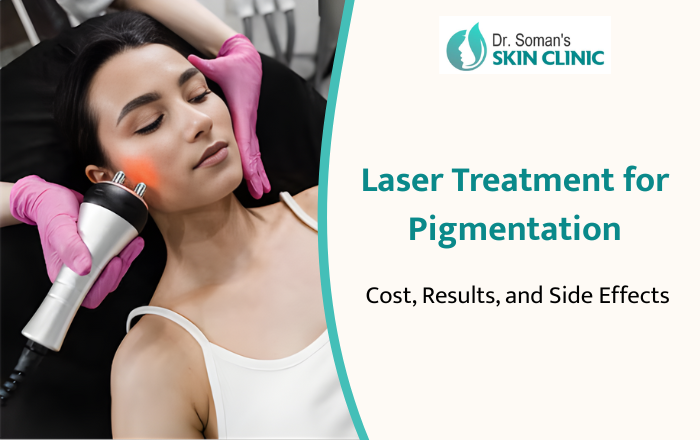
Laser Treatment for Pigmentation: Cost, Results, and Side Effects Recent Posts All Posts Acne Chemical Peel Treatment Hair Treatments HydraFacial Melasma Pigmentation Skin & Hair Care Summer Skincare Laser Treatment for Pigmentation: Cost, Results, and Side Effects Healthy Skin Starts with Expert Care Skin & Hair Care January 6, 2026 Are you tired of covering dark patches on your face with layers of makeup every single day? You’re definitely not alone. Nearly 30% of adults deal with stubborn pigmentation issues like melasma, age spots, and sun damage that just won’t fade, no matter how many creams you try. laser treatment for pigmentation has become one of the most effective solutions for skin discoloration that refuses to go away. But before you book that appointment, you probably have questions running through your mind—How much will it cost? Will it actually work on my skin? What about side effects? In this blog, we’ll walk through everything you need to know about laser pigmentation removal—from real costs to actual results and potential side effects. Let’s dive in. What Causes Pigmentation on Your Skin? Before we talk about treatment, let’s understand why pigmentation happens in the first place. Your skin produces melanin, which gives it color. Sometimes, this production goes into overdrive, creating dark spots or patches. Common causes include: Sun exposure – UV rays trigger excess melanin Hormonal changes – pregnancy, birth control pills Aging – natural wear and tear on skin Acne scars – inflammation leaves dark marks behind Genetics – some people are simply more prone The most common types are melasma (those stubborn brown patches), sun spots (age spots), and post-inflammatory hyperpigmentation from old acne or injuries. How Does Laser Treatment for Pigmentation Work? Think of laser treatment for pigmentation as a smart eraser for your skin. The laser sends targeted light energy into your skin, which breaks down the melanin clusters causing those dark spots. Your body then naturally gets rid of these broken-down pigment particles over the following weeks. Different lasers work at different depths: Q-Switched Nd:YAG Laser – goes deeper for stubborn pigmentation Pico Laser – newer technology with less downtime IPL (Intense Pulsed Light) – works well for widespread pigmentation Fractional CO2 Laser – resurfaces skin while treating pigmentation Your dermatologist will choose the right type based on your skin tone, pigmentation depth, and treatment goals. This is especially important for Indian skin tones, as the wrong laser can actually make pigmentation worse. Laser Treatment for Pigmentation Cost: What You’ll Actually Pay Let’s talk numbers because this is probably your biggest question. In India, here’s what you can expect: Per session: ₹3,000 to ₹15,000 Complete treatment package: ₹20,000 to ₹80,000 What affects the cost? Type of laser used – Pico lasers cost more than traditional options Area being treated – small spots vs. full face makes a difference Number of sessions needed – usually 4 to 8 sessions Your location – metro cities typically charge more Dermatologist’s experience – skilled doctors charge appropriately for their expertise Most people need multiple sessions spaced 4-6 weeks apart. While the pigmentation laser treatment cost might seem high upfront, compare it to years of buying creams that don’t work laser treatment for pigmentation often proves more cost-effective in the long run. What Results Can You Actually Expect? Let’s be honest about the timeline because laser pigmentation removal isn’t magic—it’s science, and science takes time. Here’s what happens: Right after treatment: Your skin might look red or the spots may even look darker temporarily Week 1-2: Pigmented areas start to flake off Week 4-6: You’ll notice lighter, more even skin tone Month 3-6: Best results show after completing all sessions Clinical studies show that laser treatment for pigmentation achieves 70-90% improvement for most people. Sun spots and age spots respond best, while melasma can be trickier and might need touch-ups. How long do results last? Typically 1-5 years, depending on how well you protect your skin from the sun afterward. Yes, sun protection becomes your new best friend—non-negotiable! Side Effects: What You Should Know Every treatment has risks, and being informed helps you make better decisions. Common side effects (usually temporary): Redness and swelling for 2-7 days Crusting or scabbing as skin heals Temporary darkening before lightening Mild burning sensation Increased sun sensitivity Rare but serious side effects: Post-inflammatory hyperpigmentation (new dark spots, especially on darker skin) Hypopigmentation (lighter patches where treated) Scarring if not done correctly Infection if you don’t follow aftercare instructions Studies show that when performed by qualified dermatologists, serious side effects happen in less than 2% of cases. The key is choosing an experienced professional who understands your skin type. Who Should Get Laser Treatment? You’re a good candidate if: Creams and serums haven’t worked for you Your skin is healthy with no active breakouts or infections You can commit to sun protection after treatment You have realistic expectations (no overnight miracles!) You’re not pregnant or breastfeeding Skip it if: You have active acne or skin infections You’ve recently tanned or been in the sun a lot You form keloid scars easily You’re taking medications that make skin sun-sensitive What to Expect During Treatment Your appointment will typically last 15-45 minutes. The dermatologist will clean your skin and apply numbing cream to reduce discomfort. Most people describe the sensation as tiny rubber band snaps—tolerable but not exactly comfortable. After treatment, follow these rules: Keep skin clean and apply prescribed ointments Avoid makeup for 24-48 hours Use SPF 50+ sunscreen every single day (yes, even indoors) Don’t pick at any scabs or crusts Stay hydrated and moisturize regularly Common Questions Answered Q1. Is laser treatment painful? Most people find it tolerable with numbing cream. You’ll feel some discomfort, but it’s usually bearable. Q2. How many sessions will I need? Typically 4-8 sessions, but melasma often needs more. Your dermatologist will create a plan specific to your needs. Q3. Can it make pigmentation worse? Yes, if done incorrectly or on the wrong skin type. This is why choosing
Healthy Skin Starts with Expert Care
Healthy Skin Starts with Expert Care Recent Posts All Posts Acne Chemical Peel Treatment Hair Treatments HydraFacial Melasma Pigmentation Skin & Hair Care Summer Skincare Laser Treatment for Pigmentation: Cost, Results, and Side Effects Healthy Skin Starts with Expert Care Skin & Hair Care January 6, 2026 By Dr. Vallari Soman, Consultant Dermatologist & Cosmetologist (MBBS, DVD) Your skin is more than just your appearance—it’s a reflection of your overall health. From acne and pigmentation to hair fall and signs of aging, skin concerns can affect confidence and quality of life. With the right medical guidance and personalized care, healthy and radiant skin is absolutely achievable. As a Consultant Dermatologist & Cosmetologist, Dr. Vallari Soman believes in combining medical expertise, advanced technology, and holistic skincare to deliver safe, effective, and long-lasting results. Why Dermatologist-Led Skincare Matters With countless skincare products and online advice available today, it’s easy to feel overwhelmed. What works for one person may harm another. Dermatologist-guided skincare ensures: Accurate diagnosis of skin and hair conditions Treatments backed by medical science Personalized solutions based on skin type and lifestyle Safe use of clinical and cosmetic procedures Self-medication and trial-and-error often worsen skin problems. Professional care helps you get results without compromising skin health. Common Skin & Hair Concerns We Treat 1. Acne & Acne Scars Acne is a medical condition, not just a cosmetic issue. Timely treatment prevents scarring and pigmentation. We offer customized acne management, scar reduction therapies, and maintenance plans. 2. Pigmentation & Uneven Skin Tone Melasma, tanning, dark spots, and post-acne marks are treated using a combination of medical treatments, chemical peels, and advanced laser solutions. 3. Hair Fall & Scalp Disorders From nutritional hair fall to hormonal and genetic causes, accurate diagnosis is key. Treatments include medical therapy, PRP, and scalp care protocols. 4. Anti-Aging & Skin Rejuvenation Fine lines, wrinkles, and dull skin can be effectively managed with non-surgical treatments such as botulinum toxin, fillers, PRP, and rejuvenation procedures. 5. Skin Infections & Allergies Fungal infections, eczema, psoriasis, and allergic skin conditions require prompt and correct medical treatment for long-term control. Our Approach to Skincare At our clinic, every patient receives personalized attention. There is no “one-size-fits-all” solution in dermatology. Our approach includes: Detailed skin and hair evaluation Patient education and lifestyle guidance Evidence-based medical treatments Ethical cosmetic procedures with natural-looking results We focus on skin health first, aesthetics second—because beautiful skin starts with healthy skin. Simple Dermatologist-Approved Skincare Tips Cleanse your face gently twice a day Never skip sunscreen—even indoors Avoid using too many products at once Do not pop pimples or self-treat rashes Consult a dermatologist before trying new treatments Consistency and correct guidance make all the difference. Your Skin Deserves Expert Care Whether you’re dealing with a long-standing skin condition or simply want healthier, glowing skin, professional dermatology care can transform your journey. Consult Dr. Vallari Soman for ethical, effective, and personalized dermatology and cosmetology solutions.